
Bread & Butter LOCO Review: Full Test Results Before You Buy
The Loco is Bread & Butter’s first full foam paddle, and in my opinion, it bumps them up into the same conversation as the big performance brands like Selkirk, JOOLA, and Gearbox.
I ran all my usual tests on this one, and what I found is a true elite power paddle with a big sweet spot, good feel, and a couple of caveats you should know about before you buy.
Here’s what I found.
Table of Contents
Paddle Specs
Technology & Construction
Performance Testing & Metrics
KewCOR Firepower Scores
On-Court Impressions
Modding the Paddle
Final Thoughts – Worth the Hype?
Quick Disclosure
Bread & Butter sent me these paddles to test, with zero strings attached. No money changed hands; they did not see or influence this review before it went live.
If you use my affiliate link or code, you get a discount, and I earn a commission. That helps support the channel at no extra cost to you, so thank you if you choose to do that.
Use code JOHNKEW for 10% off.
Paddle Specs
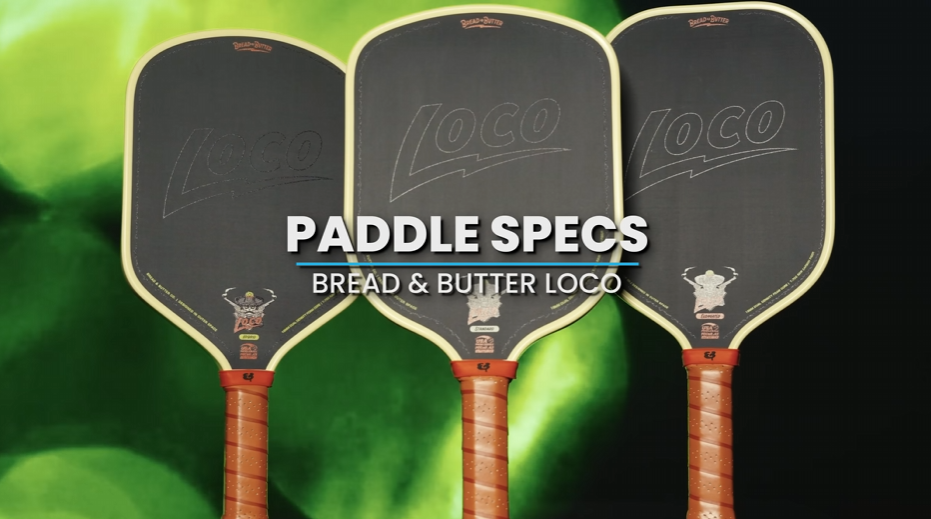
The Loco retails for $199, and you can take 10% off with my code JOHNKEW.
The Loco comes in three shapes, Elongated, Hybrid, and Widebody, and two colorways: tan and black.
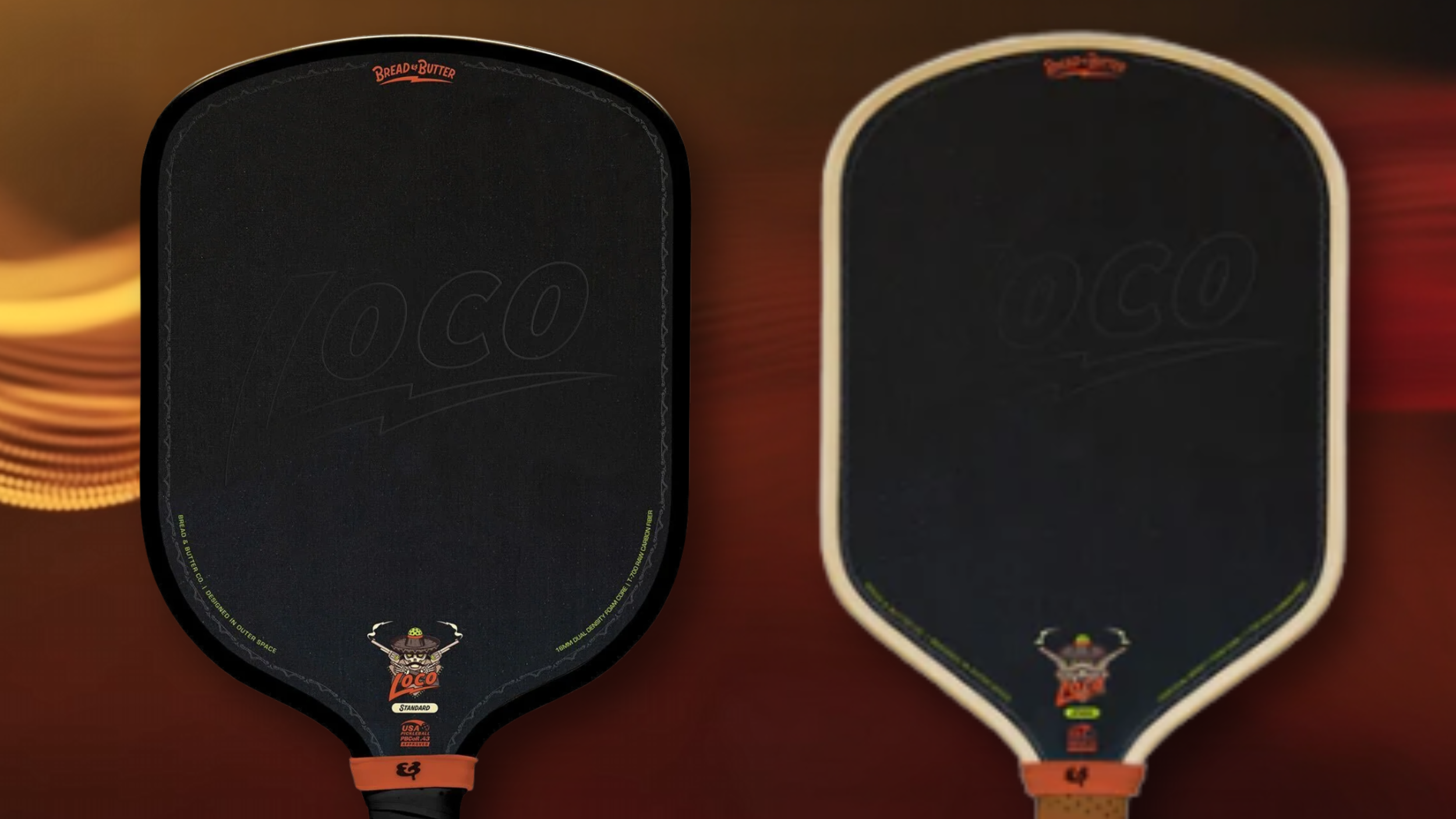
Each shape follows the dimensions you’d expect for its category, but here are the exact specs based on my measurements.
Elongated
Length: 16.46 in.
Width: 7.40 in.
Thickness: 16 mm
Handle Length: 5.67 in.
Static Weight: 7.98 oz.
Hybrid
Length: 16.26 in.
Width: 7.72 in.
Thickness: 16 mm
Handle Length: 5.51 in.
Static Weight: 8.07 oz.
Widebody
Length: 15.91 in.
Width: 7.99 in.
Thickness: 16 mm
Handle Length: 5.43 in.
Static Weight: 8.01 oz.
Technology & Construction
The Loco is Bread & Butter’s first full-foam paddle.
The paddle face uses a CFC layup: carbon fiber, fiberglass, carbon fiber.
That fiberglass layer adds extra stiffness, pop, and responsiveness. You feel this on court.
Inside the paddle, it uses:
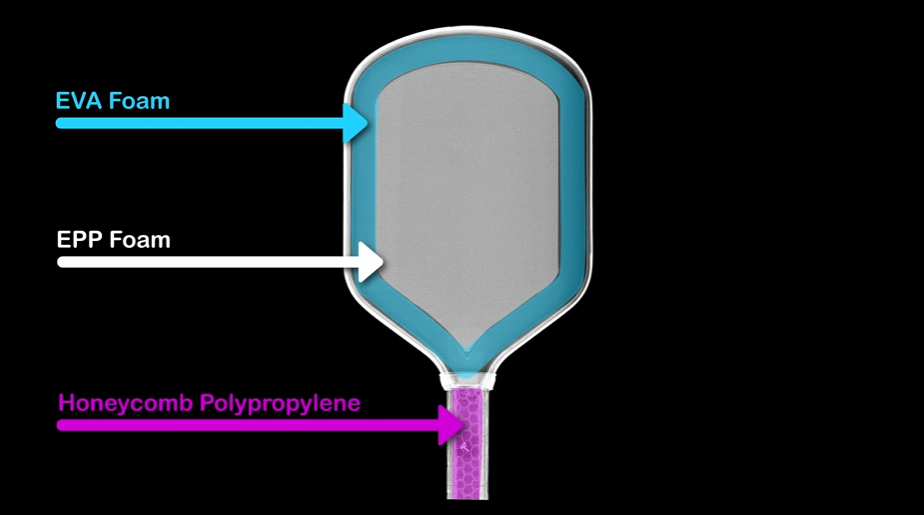
An EPP (expanded polypropylene) center core
A floating EVA foam band around the perimeter
With it being thermofromed, you get:
A stiffer frame
A wider sweet spot
More consistent feel across the face
If you look at the X-ray:
The blue ring around the edge is the softer EVA
The middle section is the denser EPP
The foam is fully floating, meaning it isn’t attached to the handle directly
To help keep weight down, the handle is filled with honeycomb polypropylene.
Performance Testing & Metrics
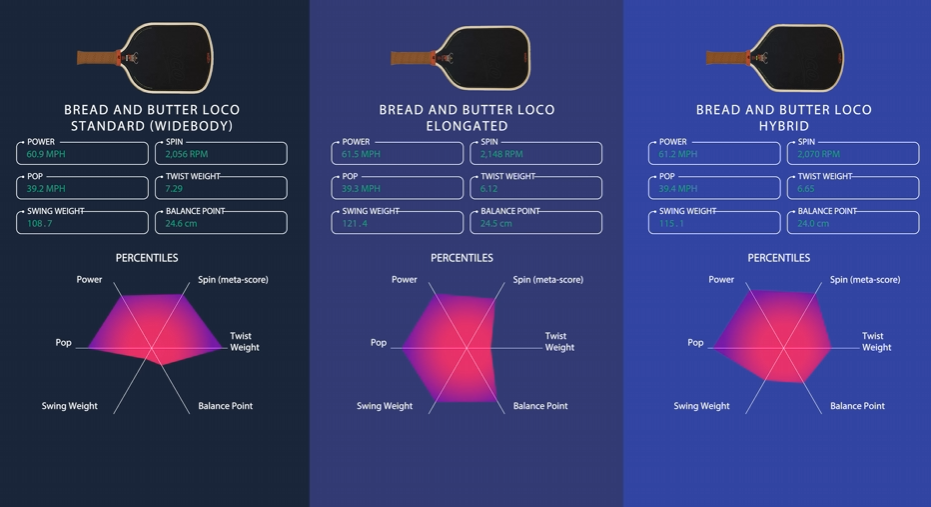
I ran all three shapes through my full testing process: KewCOR cannon, radar gun, spin, swing weight, twist weight, and sweet-spot evaluation.
Power & Pop
All three shapes scored in the high 80s and 90s, so they’re all true power paddles.
The elongated had the highest overall power score, with the hybrid close behind
The widebody was the lowest of the three, but still firmly in the high-power range
Spin
Spin landed between 2050 and 2150 RPM across all shapes, putting the LOCO line in the spin-meta 70s.
None of the shapes outperformed the others here
On court, I could shape the ball the same, no matter which one I used
Swing Weight
This is where the shapes separate the most
The elongated swing is heaviest at 121.4, the hybrid sits in the middle at 115, and the widebody is the quickest at 109.
The elongated gives you the most momentum, while the widebody gives you the fastest hands.
Use code JOHNKEW for 10% off.
KewCOR Firepower Scores
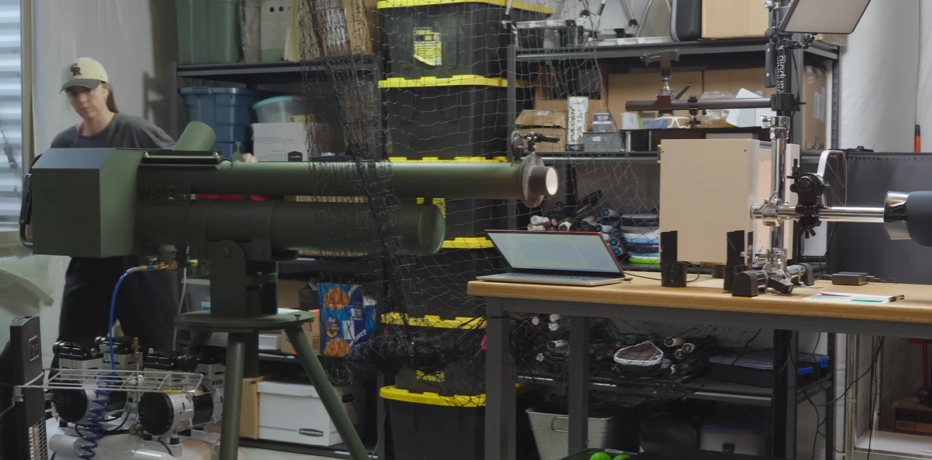
To measure firepower, I ran all three Loco shapes through my ball cannon, which is how I calculate KewCOR.
This is my version of PBCOR/PEF — basically, it tells you how much energy the paddle gives back to the ball on impact.
All three shapes landed between 0.41 and 0.42, which puts the entire LOCO line solidly in the high-power category.
When you combine the radar gun numbers with the ball-cannon KewCOR results to create a single firepower score, here’s where each shape lands:
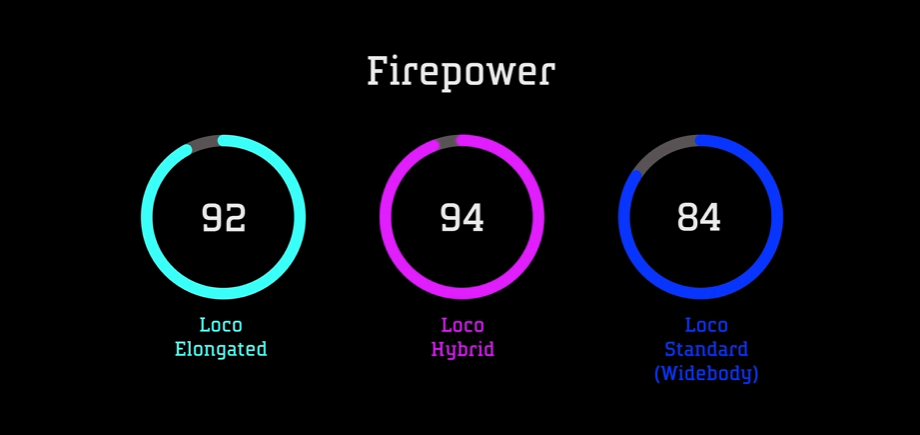
These scores line up with other big-hitting paddles like the Ronbus Quanta and Luzz Inferno at the top end, with the Thrive Fury sitting closer to the widebody’s range.
On-Court Impressions
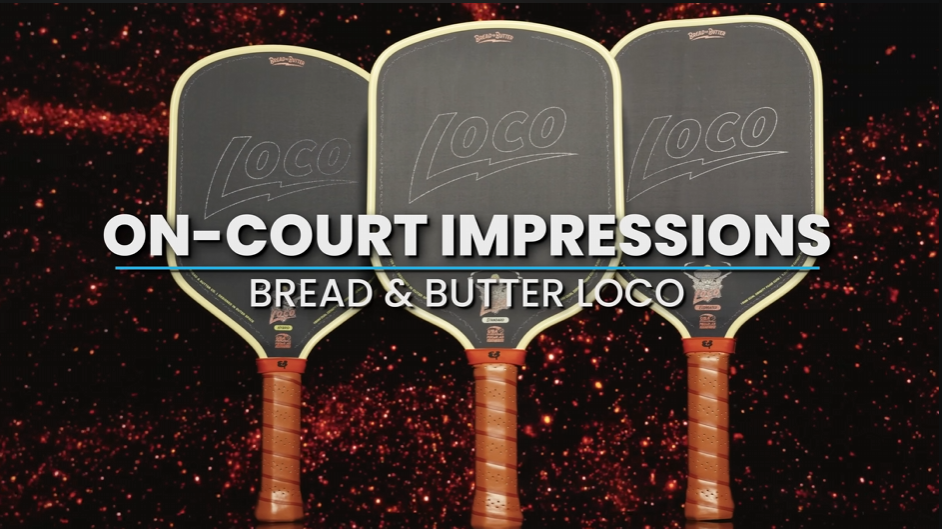
These paddles are best for players who:
Like high-power paddles
Want a large, forgiving sweet spot
The bigger sweet spot helps with control, but these are still power-first paddles. Compared to something like the Honolulu NF or FC Plus, you give up some soft-touch control in exchange for more pop.
Feel
The LOCO has a crisp, lively feel. It’s stiffer and a bit hollow, with some fiberglass “snap” from the CFC layup. It is not as hollow as the Boomstik, but definitely stiffer than something like the Honolulu J2NF.
Controlling the Pop
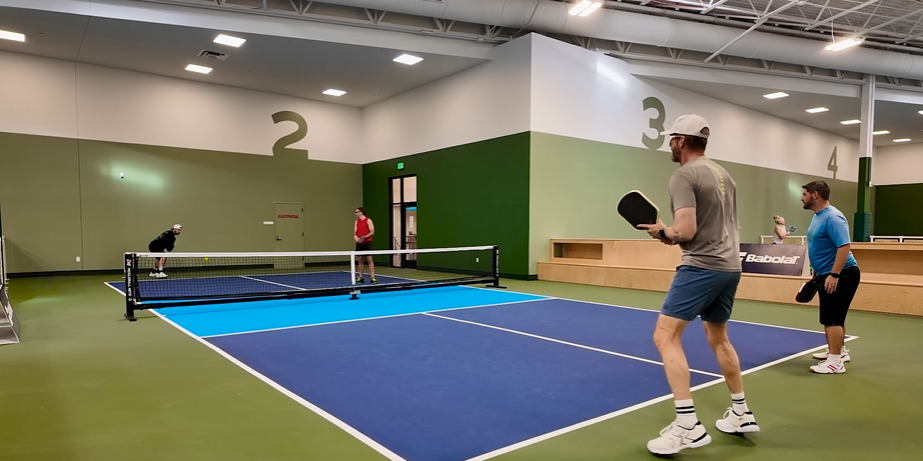
I personally struggled at first with pop control, especially on resets. The ball left the face faster than I expected, compared to other full-foam paddles with more dwell time.
Believe it or not, the Loco felt a bit more unpredictable than the Boomstik at the start, even though both are poppy. Something about the stiffness plus fiberglass gave me more bounce than I expected.
The widebody fixed most of that for me:
Lower swing weight
Bigger sweet spot
Easier to mellow out with added perimeter weight
After modding and getting comfortable with all three, my favorite shape ended up being the hybrid. It had more juice than the widebody but was easier to maneuver than the elongated.
Use code JOHNKEW for 10% off.
Modding the Paddle
Here’s what I did to each shape:
Elongated
The elongated didn’t give me much room to add weight without making it swing like a sledgehammer. I kept the mod light and predictable by adding 2-inch strips of half-gram-per-inch tuning tape on each cheek. This gave it just enough stability without killing maneuverability.
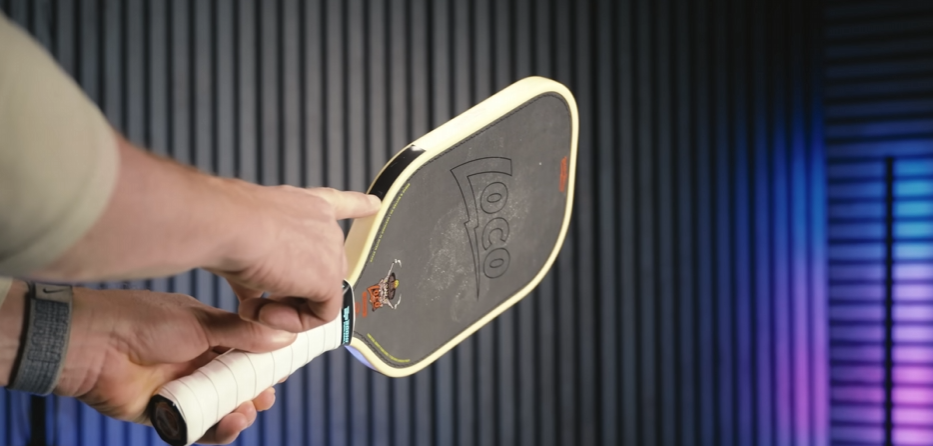
Swing weight: 121.4 → 125
Twist weight: 6.12 → 6.5.
This small bump made the paddle feel more solid and forgiving on contact, but still playable.
Hybrid
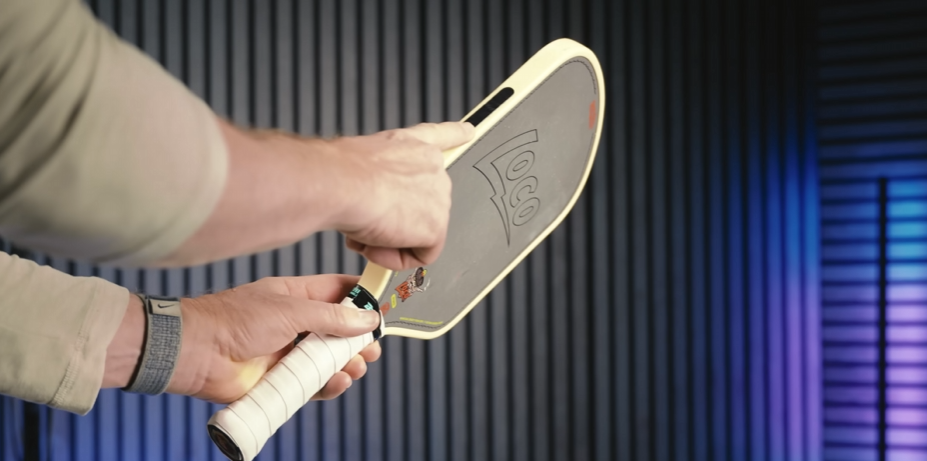
The hybrid shape handled mods the best. It already felt balanced, so my goal was simply to firm up the sweet spot. I added 3-gram pods at 3 and 9 o’clock, and the change was immediately noticeable.
Swing weight: 115.1 → 117.4
Twist weight: 6.65 → 7.5
This gave me the most “complete” feel of the three, more stability, better forgiveness, and no real downside.
Widebody
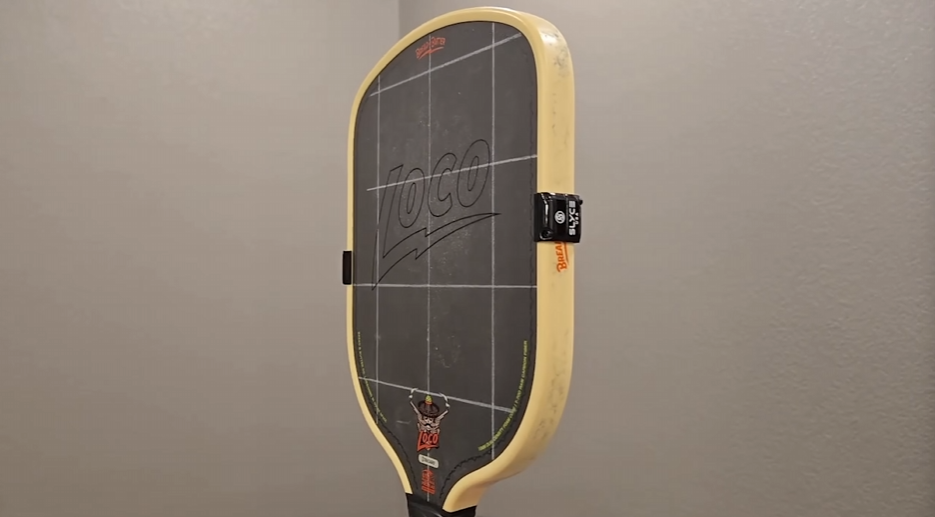
The widebody has the lowest stock swing weight, so I had the most flexibility here. I used 5-gram Slyce SLYDRS at 3 and 9, which opened up the sweet spot and helped tame the extra pop.
Swing weight: 108.7 → 111.2
Twist weight: 7.29 → 8.1
Because it starts so light, adding weight didn’t make it clunky at all. Instead, it made the paddle feel smoother and more predictable.
Final Thoughts – Worth the Hype?
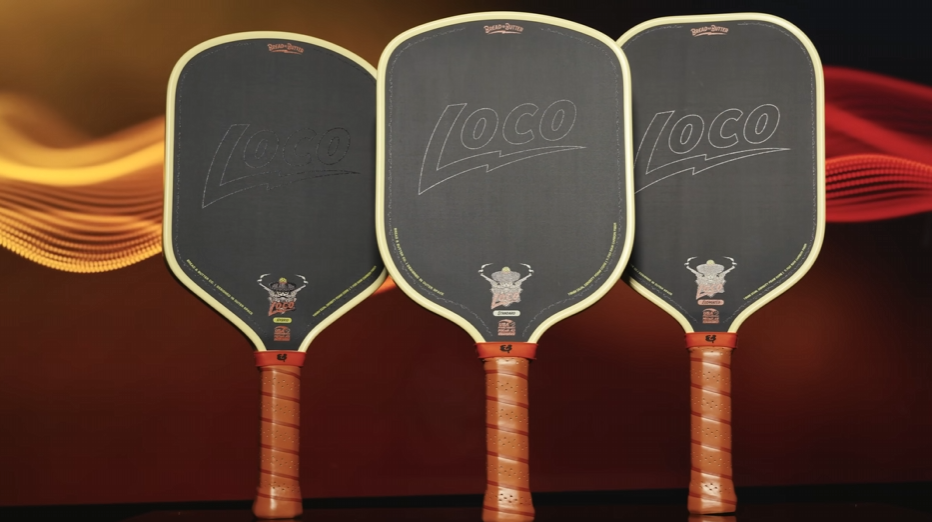
Here’s my take:
The Loco is one of the strongest options for a high-power, full-foam paddle on the market right now. If you like:
Elite power
A crisp, slightly hollow feel
A big sweet spot
And don’t mind fiberglass in the layup
If you struggle with controlling pop, it might not be the right fit. Even with the oversized sweet spot, you’re still working with a paddle that hits very hard.
Performance-wise, the Loco competes with the Boomstik but costs over $100 less.
As for the hype around the pre-sale — don’t buy just because it sells out fast. If you aren’t sure this is your paddle, wait. The Loco will restock every few weeks, so you’ll have more chances.
If you are sure, then yes — act fast during pre-sales, because so far, they’ve been selling out in under a day.
Use code JOHNKEW for 10% off.
