
Spartus Spitfire vs PAKLE Fuse
Two budget elongated power paddles that are near-twins on paper. The split is spin versus a little more pop.
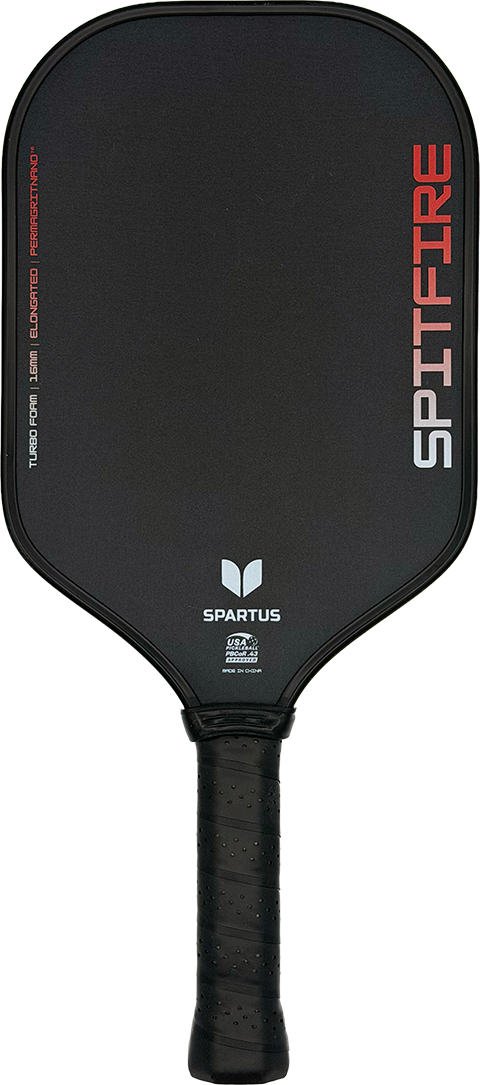
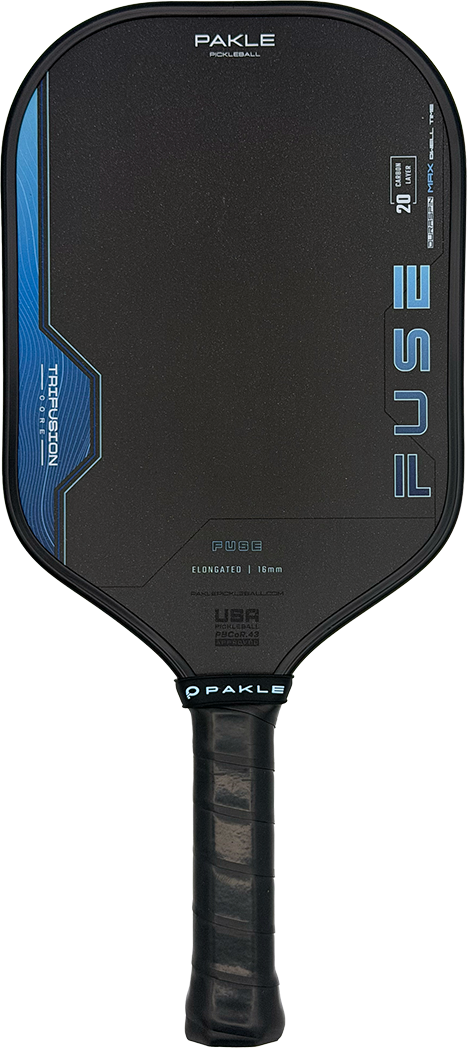
Quick take: These two are near-twins on paper: both budget elongated 16mm power paddles, around 100 dollars, with nearly identical weight, swing weight, and dimensions. The decision is spin versus power. The Spartus Spitfire spins clearly more (2,433 vs 2,199 RPM, Elite versus Good), holds that spin better, and is the cheaper of the two. The PAKLE Fuse hits a touch harder, with a hotter KewCOR and a bit more pop, but it spins less and its surface wears the fastest.
Full spec comparison
| Metric | Spartus Spitfire | PAKLE Fuse |
|---|---|---|
| Price (with code JOHNKEW) | $99.00 cheaper | $107.10 |
| Shape | Elongated | Elongated |
| Spin RPM | 2,433 (Elite) more spin | 2,199 (Good) |
| Spin durability | Tier 3 holds better | Tier 4 |
| KewCOR (firepower) | 0.407 (Power) | 0.419 (Power) hotter |
| Firepower (0-100) | 76 | 82 |
| Serve speed (power) | 61.1 mph | 61.2 mph |
| Punch volley (pop) | 38.7 mph | 39.2 mph |
| Swing weight | 116.2 | 117.1 |
| Twist weight | 6.14 | 6.13 |
| Balance point | 24.8 cm | 24.3 cm |
| Static weight | 7.8 oz | 7.9 oz |
| Length x width | 16.5 x 7.4 in | 16.5 x 7.4 in |
| Handle length | 5.51 in | 5.50 in |
| Face / core | Toray carbon, EPP foam core | T700 carbon, EPP/TPU core |
| Surface | Grit-infused peel ply | Coarse peel ply |
| Certification | USAP | USAP |
| Warranty | 6 months | 6 months |
Spin and durability: the Spitfire's edge
This is where they separate. The Spitfire posts 2,433 RPM, which lands in my Elite spin tier, while the Fuse reads 2,199, a Good number but a clear step down, and the roughly 10 percent gap is enough to feel on a serve or a roll. Durability widens it further: the Spitfire is Tier 3, so it loses some texture over time but holds a lot of its bite, while the Fuse is Tier 4, my lowest group, meaning its already-lower spin fades the fastest. So the Spitfire wins spin both fresh out of the wrapper and months down the road. To be clear, the Spitfire is not a Tier 1 spin-retention paddle, but against this specific opponent it is well ahead.
Power: the Fuse hits a hair harder
The Fuse takes this one, but the margin is small. Both sit in my Power performance profile, with the Fuse at a KewCOR of 0.419 to the Spitfire's 0.407 and a Firepower score of 82 to 76. Their serve speeds are essentially identical (61.2 vs 61.1 mph), and the Fuse has a touch more pop (39.2 vs 38.7). So if raw firepower is your only priority, the Fuse edges it, just not by much.
Shape and feel: nearly identical
On the specs that drive feel, these are about as close as two different paddles get. Both are elongated at roughly 16.5 by 7.4 inches, both carry a mid-high swing weight (116.2 vs 117.1) and a similar, fairly high balance point, and their twist weights are almost the same (6.14 vs 6.13). Those twist weights are on the lower side for both, so neither is especially forgiving on off-center hits; you are choosing between two similarly demanding, head-forward elongated paddles. In hand they should play a lot alike, which is exactly why the spin and power differences, not shape, are what should decide it.
Feel Map
This is the clearest sign of how alike these two are. Both sit far out in the Soft + Hollow quadrant, almost directly on top of each other, meaning they feel nearly identical: hollow and lively, right around the middle of the soft-to-stiff range.
Build
Both use a raw carbon face over an EPP-based full-foam core, which is a springy recipe and helps explain why both are Power-profile paddles. The Spitfire runs a Toray carbon face with a grit-infused peel ply surface, while the Fuse uses a T700 carbon face with a coarser peel ply. That surface difference is the most likely reason the Spitfire grips the ball for more spin. I would not tell you either construction is better in the abstract; the numbers are what separate them.
[JOHN: on-court take goes here. You have real time and testing on the Spitfire, so add how it plays against the Fuse and confirm or adjust anything above. This firsthand read is the strongest part of the page.]
Who each one is for
Get the Spartus Spitfire if you want the most spin and the best value: Elite spin that holds up better over time, at the lowest price. It is the spin-first budget elongated pick.
Get the PAKLE Fuse if raw power is your priority over spin: a slightly hotter, poppier paddle in the same budget elongated shape, and you are fine with lower spin that will not last as long.
Who neither is for: players who want a forgiving, easy-to-hit paddle, since both have lower twist weights and are fairly demanding, or anyone after a soft, control-first feel, since both are firmly Power-profile. Both are inexpensive, low-stakes paddles, so neither is a big commitment either way.
Frequently asked questions
Which has more spin, the Spartus Spitfire or the PAKLE Fuse?
The Spartus Spitfire, and by a clear margin. It reads 2,433 RPM (Elite) to the Fuse's 2,199 (Good), and it also holds its spin better: the Spitfire is Tier 3 for durability while the Fuse is Tier 4, my lowest group. So the Spitfire spins more now and keeps more of it over time.
Which paddle is more powerful?
The PAKLE Fuse, but only slightly. It has a KewCOR of 0.419 to the Spitfire's 0.407 and a Firepower score of 82 to 76. Their serve speeds are nearly identical (61.2 vs 61.1 mph), and the Fuse has a touch more pop, so the power edge is real but small.
Do the Spitfire and Fuse feel different?
Less than you might expect. They are both elongated at about 16.5 by 7.4 inches with very similar swing weight (116.2 vs 117.1), balance, and twist weight, so they play a lot alike in hand. The meaningful differences are spin and a small amount of pop, not shape or feel.
Which is cheaper?
The Spartus Spitfire. With code JOHNKEW it comes to about $99.00, versus about $107.10 for the PAKLE Fuse.
Which should a budget player buy?
For most budget players the Spitfire is the stronger buy: more spin, better durability, and a lower price in the same shape. Choose the Fuse instead only if you specifically want the extra pop and do not care much about spin or how long the surface lasts.
← Browse all paddle matchupsSee these paddles in the full database →
Quick disclosure: I test every paddle independently, with no payment and no editorial input. The buy links use my affiliate code (JOHNKEW), and if you use it I earn a commission that helps support the website. It never changes how a paddle is tested or where it lands in the data.