

Bread & Butter Loco 2 Review (Elongated and Hybrid)
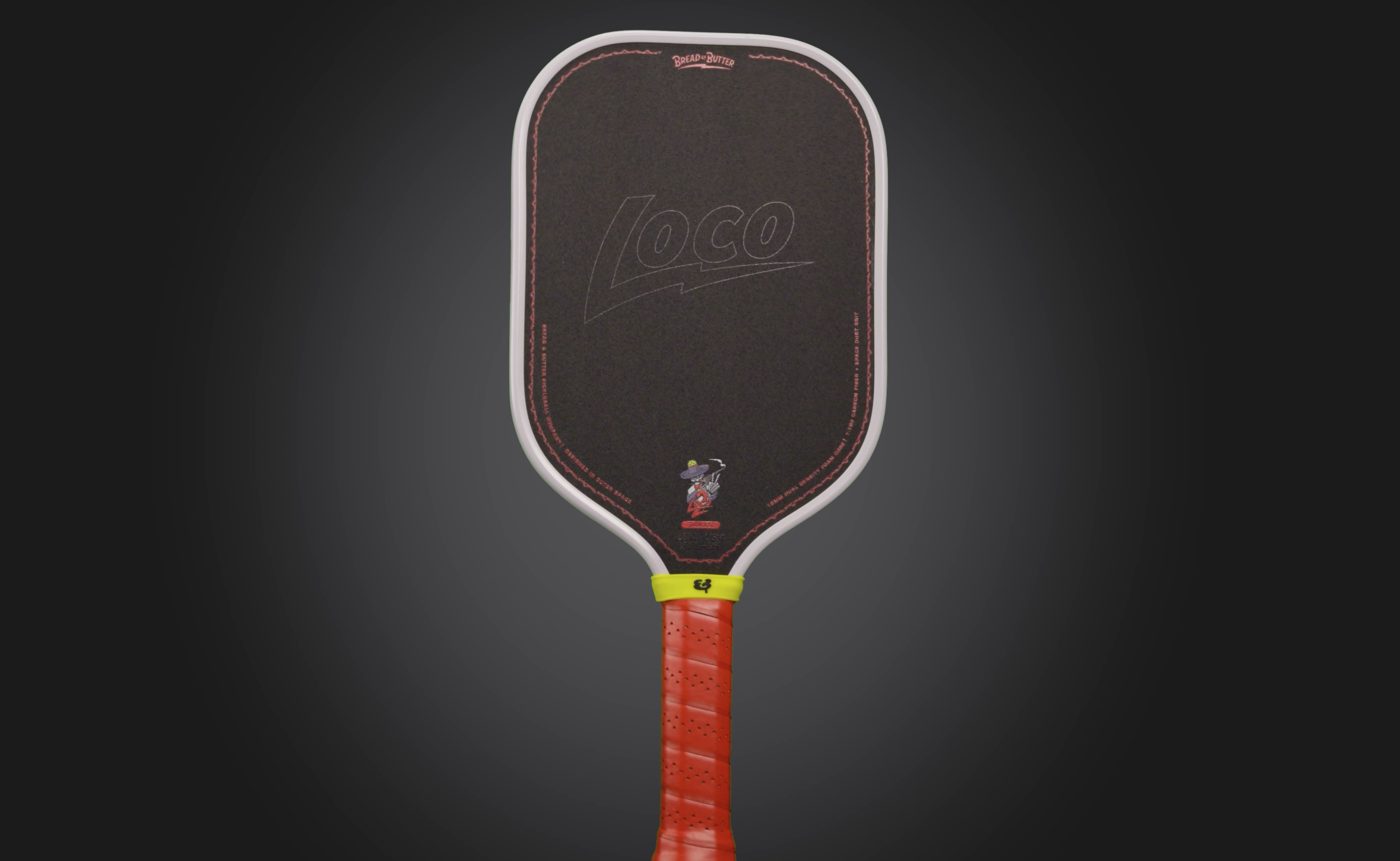
The original Loco won my Paddle of the Year award for 2025, and it had exactly one flaw: the grit wore down quickly, just like other raw carbon fiber paddles. The Loco 2 changes that and nothing else. Same core, same layup, same feel, now with a new surface called Space Dust Grit that Bread & Butter promises is durable. I tested both shapes, elongated and hybrid. The elongated launches first at $220 ($198 with my code JOHNKEW), and the hybrid should follow in the next few weeks, once certification testing finishes.
Spin on serves jumped from the high 2,200s on the originals to 2,448 RPM on the elongated and 2,411 RPM on the hybrid, which moves both shapes from Good to Elite. In my cannon test, a production Loco 2 did not lose spin after accelerated wear. It gained 7.6%, which earns a provisional Tier 1 for spin durability, up from the original's Tier 4. KewCOR is 0.424 on the elongated and 0.429 on the hybrid, Power (Mid) and essentially unchanged from the originals at 0.430.
The durability result comes from one paddle on one machine, and it is a comparison between surfaces, not a game count. It needs real court time to confirm, and I'll keep updating this review as I log more games.
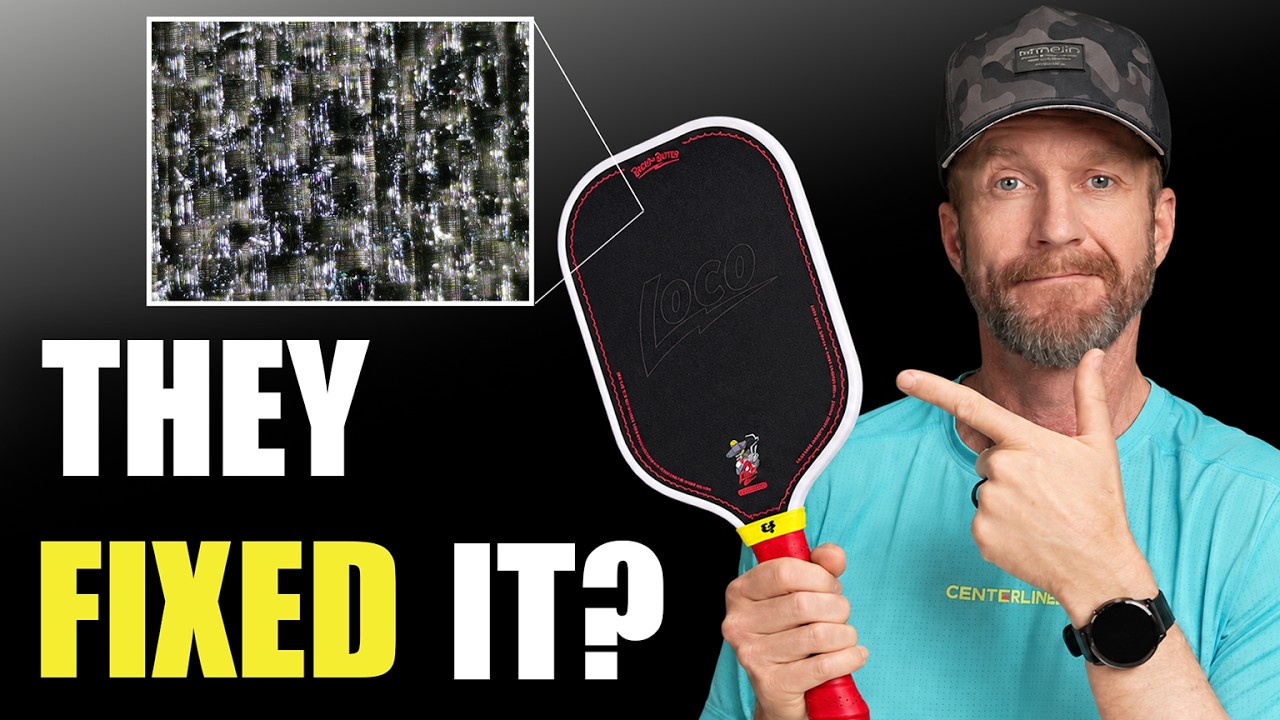
Prefer video? Watch my full Loco 2 video review on YouTube.
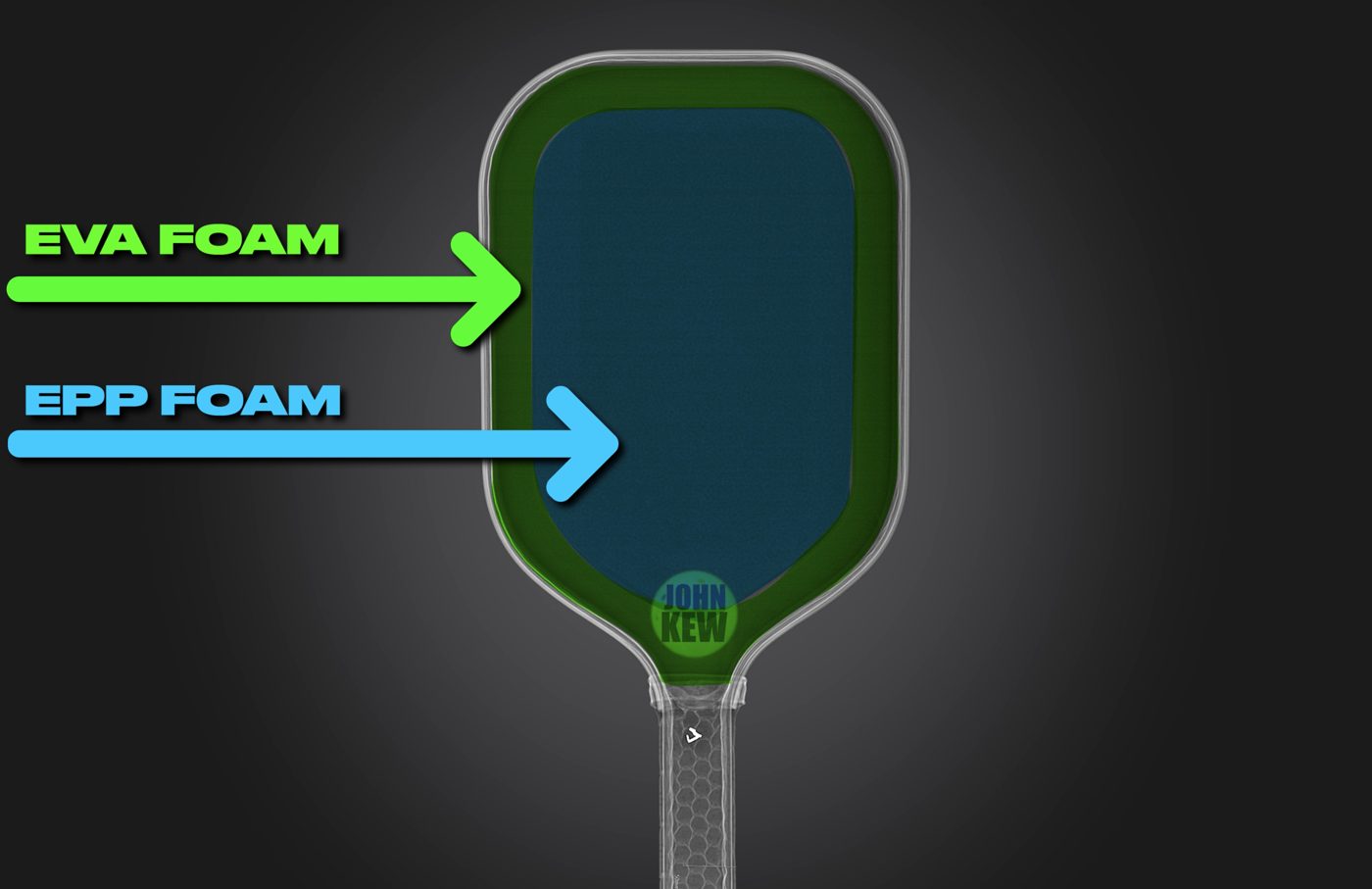
Nothing changed on the inside. The Loco 2 has the same central core of EPP foam surrounded by an EVA foam border, a thermoformed Gen-4 build, and a CFC layup: carbon, fiberglass, carbon. That layer of fiberglass is a big part of what gave the original its snappy, springy feel, and it is still here. If you want a full breakdown of the core, check out my original Loco review.
The change is the surface. Bread & Butter calls it Space Dust Grit, and it comes with a promise of improved durability and longer-lasting spin. The Loco 2 is the same paddle with new grit and a facelift.
| Loco 2 Elongated | Loco 2 Hybrid | |
|---|---|---|
| Length x Width (in) | 16.51 x 7.48 | 16.21 x 7.76 |
| Handle Length (in) | 5.71 | 5.47 |
| Static Weight (oz) | 7.8 | 8.0 |
| Swing Weight | 119.9 | 113.2 |
| Twist Weight | 6.25 | 6.93 |
| Balance Point (cm) | 24.6 | 23.8 |
| Core | Full-foam EPP + EVA border | Same |
| Face / Build | CFC (carbon, fiberglass, carbon), thermoformed Gen-4 | Same |
| Surface | Space Dust Grit (grit-infused peel ply) | Same |
| Thickness | 16mm | Same |
| Certification / Warranty | USAP + UPA-A / 1 year | Same |
| Retail Price | $220 ($198 with JOHNKEW) | Same |
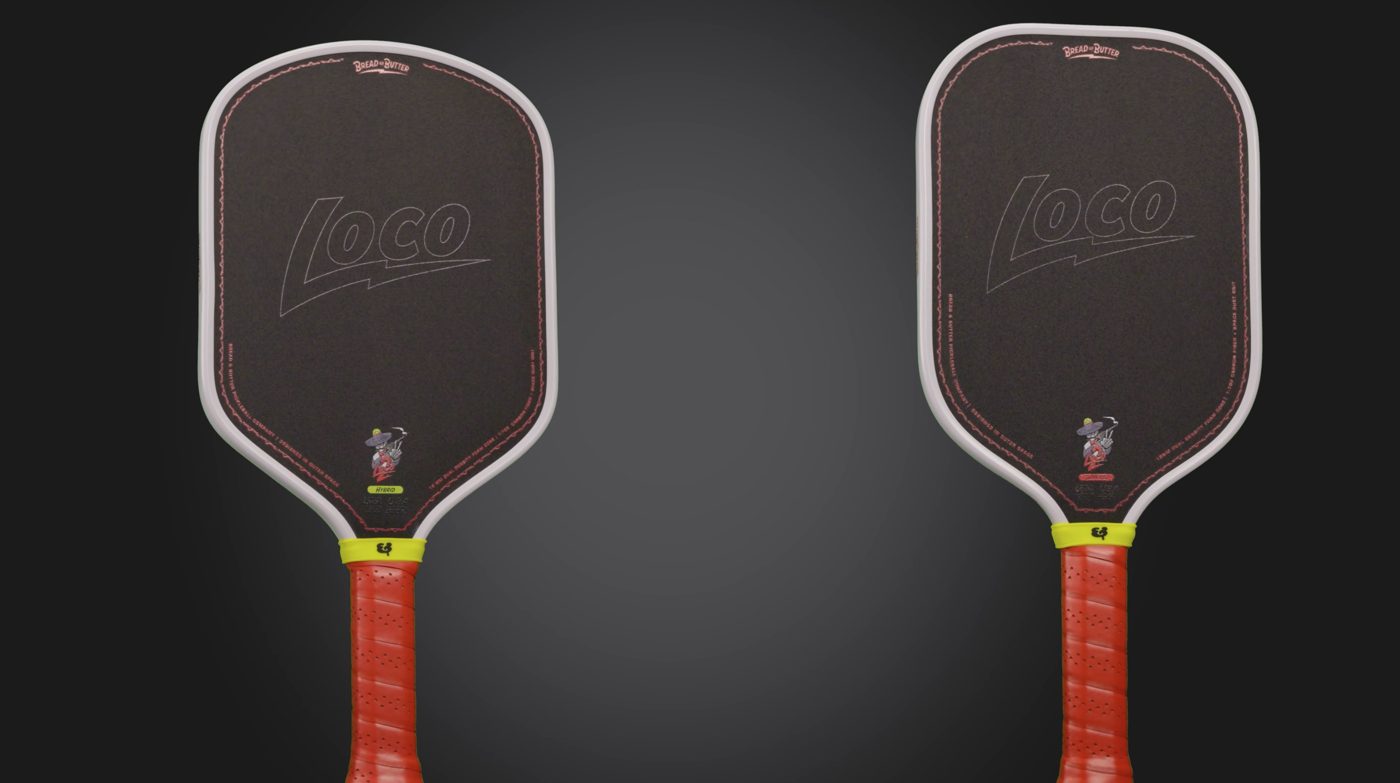
This launch starts with only the elongated shape. The hybrid is currently at the agencies being tested for certification, so that is expected to be launched in the next few weeks. I don't know if a widebody is in the works, but for now it isn't on the docket.
The hybrid is the more maneuverable of the two. Check the swing weight row in the table above for a quick read on how heavy each paddle feels when you swing it. Twist weight shows the hybrid is also the more stable of the two. The elongated gives you the reach and a higher sweet spot.
Compared to the originals, both Loco 2 shapes swing a little lighter: about 3 points lighter on the elongated and about 5 on the hybrid. That is a small change, but the direction is helpful, since the original elongated was on the heavy side.
The Loco 2 is also dual certified, USAP and UPA-A, which I think is a big deal. Before this paddle, getting Tier 1 durable grit meant choosing one certification or the other. If the Loco 2 holds up as a true Tier 1, you get both stamps on the same paddle, which means that if you play in tournaments, you're covered no matter what.
The price went up $21, from $199 on the original to $220, or $198 with my code JOHNKEW.
KewCOR is a controlled firepower metric: how efficiently the paddle transfers energy back into the ball, measured with a ball cannon.
KewCOR comes in at 0.424 on the elongated and 0.429 on the hybrid. The originals were both 0.430. That is a tight cluster, right in the middle of the Power category.
A few other paddles that were recently relaunched with a new grit makeover picked up firepower despite having the same internals. The Loco 2 did not. Power is essentially identical between the two shapes (scaled scores of 70 and 71), and pop is slightly higher on the hybrid (65 on the elongated, 71 on the hybrid). If you loved how the original hit, this is the same paddle.
Spin on serves averaged 2,448 RPM on the elongated and 2,411 RPM on the hybrid. That is a notable bump over the original Locos, which averaged in the high 2,200s. Both shapes move from Good to Elite.
A quick reminder: this is the spin a human generates in a swing, measured by radar. The cannon numbers in the Spin Durability section below are a different measurement entirely, so don't compare the two.
| Loco Elongated (original) | Loco 2 Elongated | Loco Hybrid (original) | Loco 2 Hybrid | |
|---|---|---|---|---|
| Spin RPM (radar, human-generated) | 2,267 | 2,448 | 2,254 | 2,411 |
| Spin score / category | 81 / Good | 100 / Elite | 80 / Good | 96 / Elite |
| Spin durability tier | Tier 4 | Tier 1 (provisional) | Tier 4 | Tier 1 (provisional) |
Full Feel Map scale; all four paddles land in Quadrant B (stiff and hollow). Circles are elongated, squares are hybrids; large hollow markers are the original Locos, small solid markers are the Loco 2. The dashed arrow shows the elongated moving from the original to the Loco 2. The hybrid barely moved, so its two markers nearly overlap.
I plot every paddle on a Feel Map: stiff to soft, and hollow to dense. The original Loco lived in Quadrant B, stiff and hollow. All four paddles, both originals and both Loco 2 shapes, are plotted on the map above.
The hybrid barely moved. The Loco 2 hybrid sits right next to the original hybrid, still stiff and hollow. The elongated did move a bit: it slid toward hollower and a little softer. It is still in the stiff and hollow corner, just a tad further into the hollow side than the original elongated. That matches what I felt on court.
Because the surface is the one thing that changed, this is the part of the review that matters most. Before any numbers, a clear caveat: my accelerated wear test is not an exact replica of real-world use. It is not a clock that converts to games. It is designed to compare surfaces under identical conditions, and it should not be read as a direct prediction of how long any paddle will last on your court.
Here is what I did. I took a production Loco 2 hybrid and measured its spin off my ball cannon with a high-speed camera, hitting at 60 MPH with the paddle tilted at 30 degrees. Then I wore the surface down by firing 100 cannon impacts at the same spot at 70 MPH, and measured spin again.
| Cannon spin | Before wear (new) | After wear (used) | Change |
|---|---|---|---|
| Average spin (RPM) | 2,009 | 2,161 | +152 (+7.6%) |
| Shots measured | 9 | 10 | |
| Highest single shot | 2,345 |
New, the Loco 2 hybrid averaged 2,009 RPM off the cannon. After wear, it averaged 2,161. So it did not lose spin. It gained about 7.6%.
I want to be careful with that. The statistics say the increase is unlikely to be pure chance (a p-value of about 0.03), but I tested one paddle, and there is natural shot-to-shot variation that muddies the precision. What I am confident about is the direction: it did not fall. I also checked whether spin dropped early within each set of shots, which is the signature of a surface that is chipping away. Early shots versus later shots were within a few percent, and the difference was not statistically meaningful.
Under my tier system, that is Tier 1. The original Loco was Tier 4.
Under a microscope, the Loco 2 texture looks the same as 11SIX24's HexGrit, which is probably the best performing grit we know of today. HexGrit has now passed my spin durability test on five separate paddles, all Tier 1. Both textures are known to use silicon carbide grit infused within an epoxy peel ply.
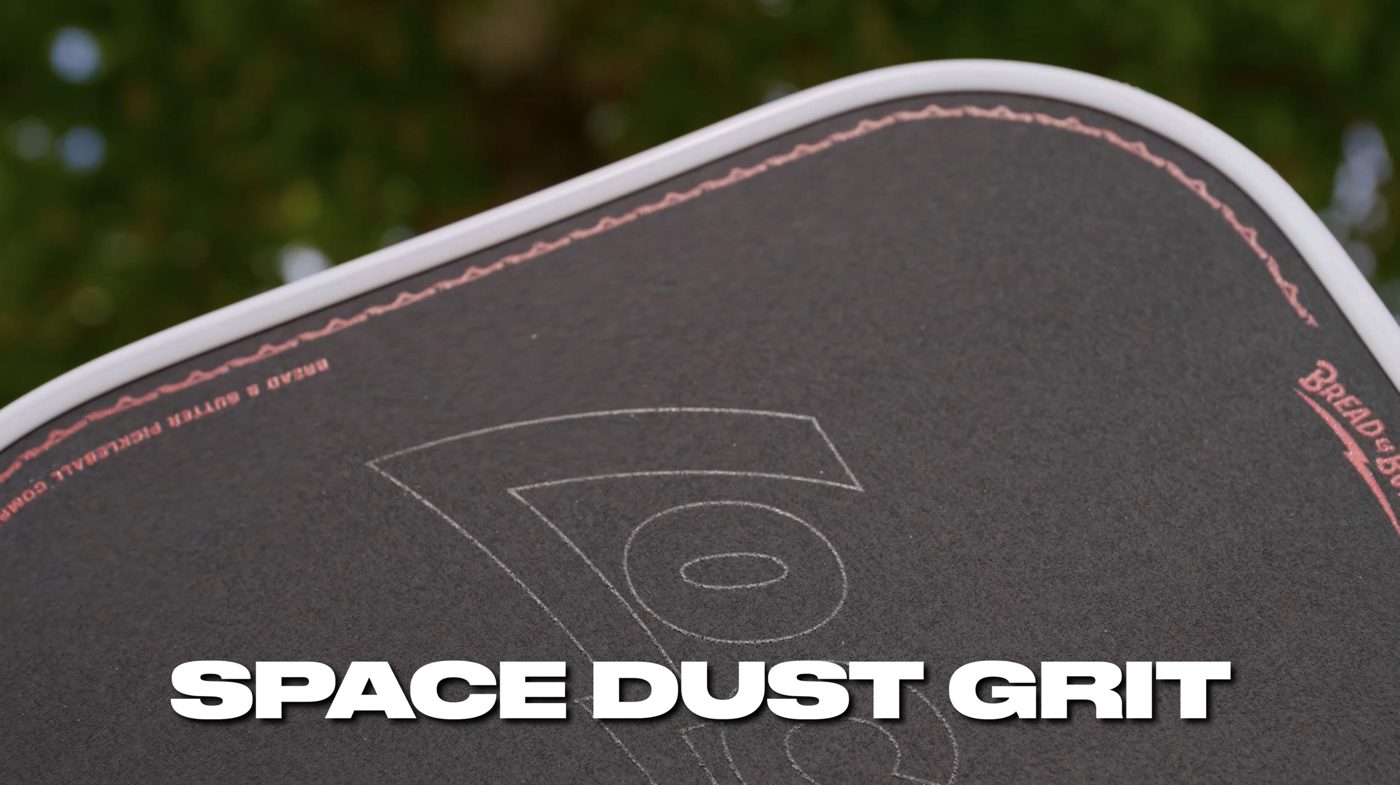
I also measured the surface itself. I ran Starrett roughness readings on two Loco 2 paddles, both before and after accelerated wear. Surface texture dropped 9 to 11 percent, depending on the type of measurement.
| Paddle / state | Rz average | Rt average |
|---|---|---|
| Paddle 1, new | 37.6 | 59.2 |
| Paddle 1, used | 33.6 | 50.2 |
| Paddle 2, new | 37.1 | 56.4 |
| Paddle 2, used | 33.8 | 54.4 |
So the surface does change, becoming a bit smoother, even though spin went up. You cannot feel any texture difference with your fingers. It is the same pattern I saw with 11SIX24's HexGrit. My best guess is that the earliest impacts knock off a more fragile layer of epoxy on top and expose the harder grit underneath, but that is far from proven.
Here is where I land. Based on the cannon, I am calling this Tier 1 spin durability, provisionally. It is a strong result in the lab, but it is not yet proven on the court. It is one paddle on one machine, and the only thing that confirms it for sure is real-world play.
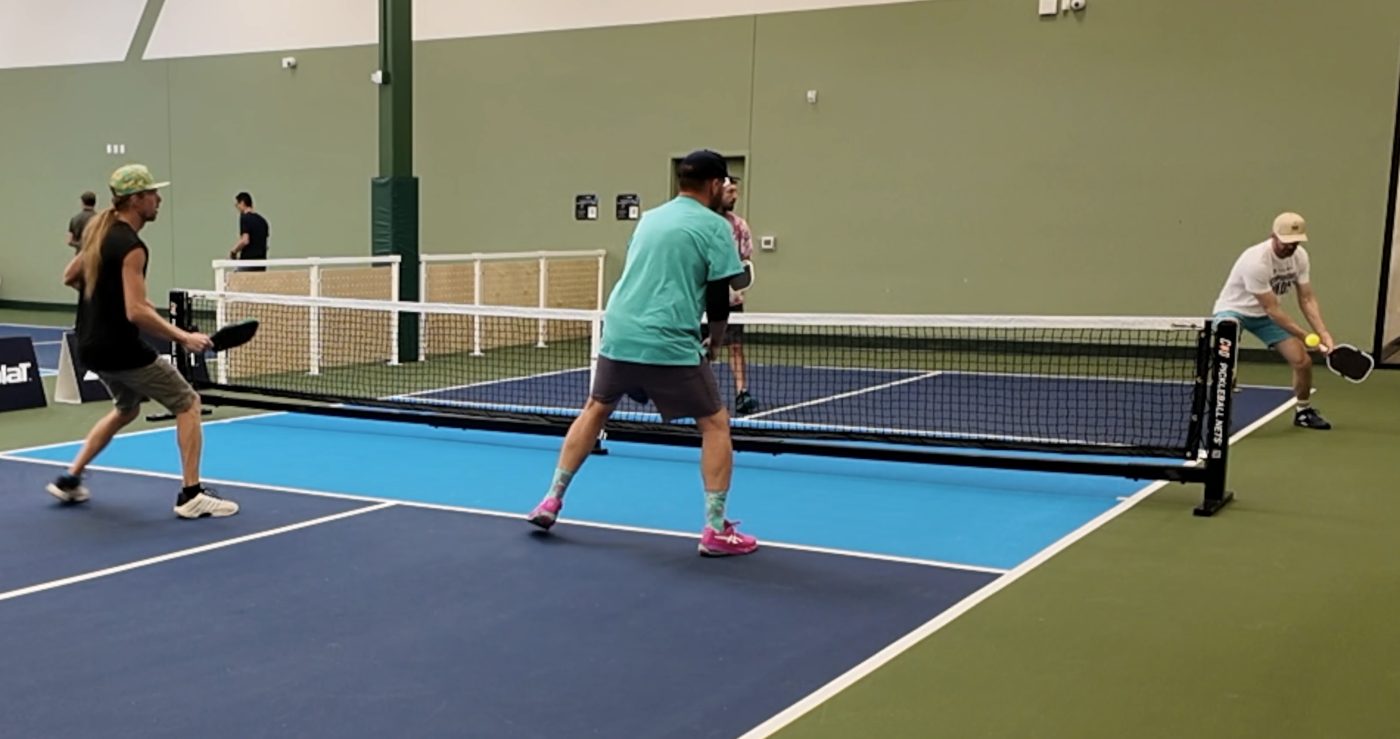
The headline is that the Loco 2 plays nearly the same as the original, but with better spin.
The hybrid feels nearly identical to the original: the same crisp, hollow contact and the same springy pop. If you played the original hybrid, you already know this paddle. The elongated is different. It is noticeably hollower than the original and slightly softer. It is still in the stiff and hollow quadrant, and the difference could just be unit-to-unit variance.
The big difference on both shapes is spin. RPM is higher than on the originals, and it is the most obvious thing you will feel the moment you start hitting.
The fiberglass snap from the CFC layup is still here, and to me it is more noticeable on the hybrid than on the elongated. When you really wind up on a shot, you feel the power output ramp up exponentially. It is like the paddle kicks into a new gear and the ball just goes.
On the flip side, that same springiness can make these paddles hard to control, especially if you are coming from a paddle with less firepower and a more linear power profile. Blasting laser beams from the baseline is a ton of fun, but it can be hard to reset your way through the midcourt. The spin helps, but it does not change the paddle's tendency to return a lot of energy to the ball.
I won't get into too many details on modding these paddles, because I think they play pretty well stock. Most people probably won't find a need to add perimeter weighting.
Personally, I went with some subtle adjustments. On the hybrid, I like 3 grams of weight at 9 and 3 o'clock. On the elongated, those same 3 grams feel best to me at 8 and 4 o'clock, a little lower on the face. Both help the sweet spot and take the edge off the pop a bit. Try it yourself and go with whatever feels best to you.
The paddles in the database with the closest overall performance profile to each shape, scored across spin, dimensions, weight/balance, power, pop, KewCOR, and feel profile. The original Locos are left out so you see the competition.
There have been dozens of Gen-4 paddles released since the original Loco launched, and most of them are very good. I was a little worried when I heard they were not changing anything but the grit, because a standard floating EPP paddle almost sounds a little vanilla in today's paddle landscape.
Playing the Loco 2 reminded me why the original won Paddle of the Year for 2025. It is solidly a power paddle, but so are most of the paddles coming out these days. To me, the Loco 2 hits a nice middle ground in the power paddle market: nothing too crazy in performance or feel, and all of it very solid. If it ain't broken, don't fix it.
Who it's for
- Players who loved the original Loco and wanted spin that lasts.
- Players who want a stiff, hollow, Power-category full-foam paddle with elite spin.
- Anyone who wants the proven original feel, specifically the hybrid.
- Tournament players who want a durable-grit paddle with both USAP and UPA-A certification.
Who it's NOT for
- Players who want a soft, dense feel. Both shapes are stiff and hollow.
- Players who struggled to control the original's pop. The core is the same.
- Anyone who wanted a widebody. There isn't one, at least yet.
Did Bread & Butter fix the one thing wrong with the original Loco without breaking anything else? On the evidence I have, yes. Spin went from Good to Elite on both shapes. The cannon says Tier 1 spin durability, up from Tier 4. And the feel and performance of the Loco 2 are almost exactly the same as the paddle that won my award.
The caveat on that yes is real. The durability result is one paddle, one test, and a comparison between surfaces, not a game count. I need real court time to confirm it. Assuming the new grit is as durable as lab testing suggests, I think the Loco 2 is a very relevant paddle today.
Two more things to know. The price went up from $199 to $220 ($198 with my code), which for me is a fair trade for durable grit. And the dual certification is a plus if you compete in tournaments.
If you already own an original Loco and you are happy with how it is holding up, you don't need to rush. This is an upgrade for spin and durability, not a reinvention.
My personal choice is the elongated Loco 2. It is my preferred shape, and it also has that slightly softer, hollower feel that I prefer. Last year the Loco won my Paddle of the Year because it did almost everything right. This year they fixed the one thing it didn't.