
Johnkew Newsletter · July 16, 2026 · 7 min read
JOOLA's Patent Grab + The PAKLE Fuse Verdict
JOOLA files for the fully floating core, three hyped paddles get their spin durability verdicts, and 22,000 pro shots reveal how points are actually won.
Get this in your inbox every week
Gear news and lab data, before it hits the site.
Pickleball News
JOOLA Is Now Going After the Fully Floating Core
Almost nobody is discussing this yet, but I think it could steer paddle design for years. JOOLA has filed a continuation on its Propulsion Core patents, and unlike the earlier ones, this filing reaches past the horseshoe to claim a core wrapped completely in foam. That is the fully floating core.
The paper trail is the whole story. Patent 826 covered the horseshoe of EVA foam around a center core, and it was granted. Patent 891 extended that to the cheek foam in the neck, granted as well. The new A1 continuation goes all the way to a full foam ring, a core surrounded entirely by foam, and it was filed on February 25 this year and has not been granted. The first two are what JOOLA is suing 11 paddle companies over, and three of those defendants, ProXR, Paddletek, and now Volair, have already settled.
Here is the twist that matters: the relevant date is 2023, not 2026. A granted continuation backdates to the original filing, November 13, 2023. So a company that quietly redesigned in 2024 or 2025 to dodge the horseshoe could find itself back inside the boundary.
The irony is that JOOLA has never sold a fully floating core, while much of the industry has. Scan the current releases and more than half use some form of floating core. The brands that settled and then went fully floating to escape the horseshoe may be walking straight back into the fire. Gearbox, for one, has wrapped cores in EVA bands for years: the GX5 Power series ran a fully floated core as far back as 2018, with two channels separating the core from the edge, one packed with EVA foam and the other with expanding foam in a carbon fiber tube, all of which the JOOLA patents describe. I have no x-ray of those early models, but the 2023 Pro Power shows the same construction.
Mark July 22 on your calendar, because that is when the remaining defendants are due to file their responses. Bring popcorn.
My position has not moved. Real innovation deserves a real defense. But the patent system is also meant to shield the public from claims on things that were already obvious or already in use, and prior art is a public good. Whether bonding a strip of EVA foam onto methods the whole industry already used counts as invention or as an obvious next step is the open question, and this case will help settle it for our sport.
What 22,000 Pro Shots Say About How Points Are Won
Pickleball.BZ just ran a piece on the argument we all have at open play: is modern pro pickleball won with power or with touch? The sourcing is strong. A 2025 paper in the International Journal of Performance Analysis in Sport broke down close to 7,000 PPA Tour shots, and a second dataset came from two University of Michigan students whose project, How Do I Win a Pickleball Point, covered 50 pro doubles matches, over 2,500 rallies and about 22,000 shots. The surprising part is that none of it was AI. Volunteers hand logged every shot from the footage.
The headline is that points are lost more than they are won. In pro doubles, 28 percent ended on clean winners, 35 percent on unforced errors, and 37 percent on forced errors. It is still an error management game, which is exactly how Ben Johns strangles teams: he leans on his soft game and waits for the mistake. At the amateur level, the fastest improvers are the ones raising their floor, not their ceiling.
Do not read that as permission to bomb every third. The study did find drives correlated with winning more than drops, but the catch is that you drive weak returns, so the soft return is what creates the point, not the drive itself. That is correlation, not causation. One caveat: some of the underlying data is stamped 2022, and the pro game has moved on since.
The one place I break with the article is its claim that firepower matters more to spin than surface friction, which leans on the dwell time theory. My high speed footage says no. Nearly every paddle grips the ball for roughly 2 milliseconds, with the spread under half a millisecond, and the Diadem Vice, among the softest and most powerful paddles ever built, is also one of the least spinny. On film the ball skates two inches across that slick face and leaves with about half the spin of a raw carbon fiber paddle. Friction is the lever.
The line worth taping to your bag comes from Clayton: in the research they cite, roughly 60 percent of pro points are over inside the first three shots. Serve, return, third. That is where the drilling pays off.
Paddles of the Week
Mission First FireFight Pro: A Firefighter-Owned Debut That Earns Its Spot
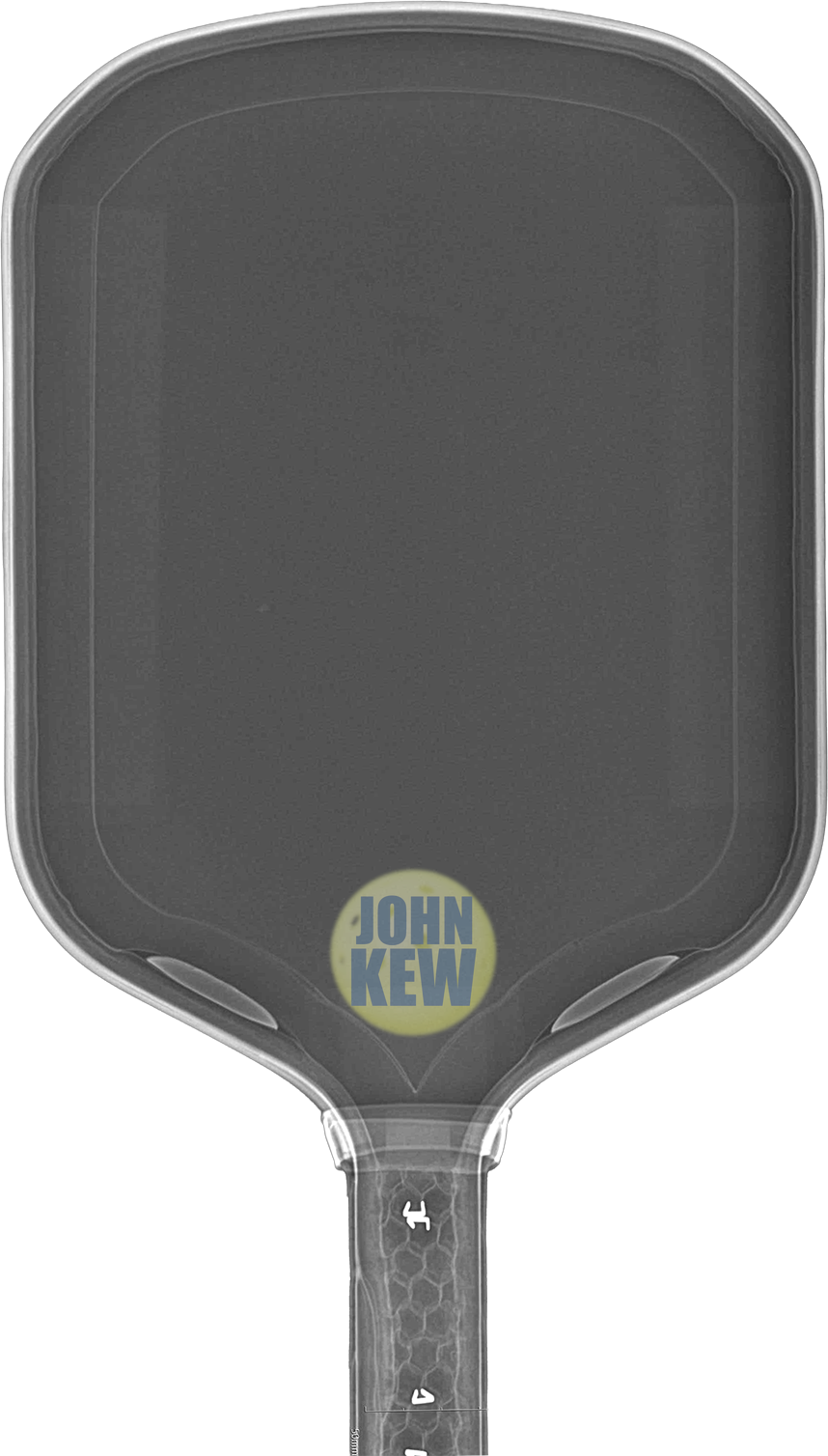
I usually skip brand new companies unless the paddle earns the space, and this one does. Mission First is firefighter owned, a first for me, and the FireFight Pro is their opening act. It is 150 dollars after code, on pre-order now and shipping late August, not yet USAP approved with a submission underway, and built full foam Gen 4 with an MPP center, a TPU band, and TPE cheek inserts.
The silhouette will feel familiar, close to the Gherkin Draco hybrid, a touch shorter and a hair wider at its widest. Not a mold clone, but the same family, and I would rank its performance right alongside the Draco and the rest of the MPP crowd. Carbon strips along the edges lift twist weight and keep the faces from collapsing. Clayton found it comfortable and forgiving even unweighted, not a bomber but there when you lean on it. It is genuinely gritty out of the box, but this is standard raw carbon fiber, so plan on tier 4 durability rather than durable grit. One straight flag: if USAP approval matters to you, hold off until it actually clears.
 X-ray
X-rayTales From the Ball Cannon
The PAKLE Fuse Verdict: The Full Numbers, and What Happens Next
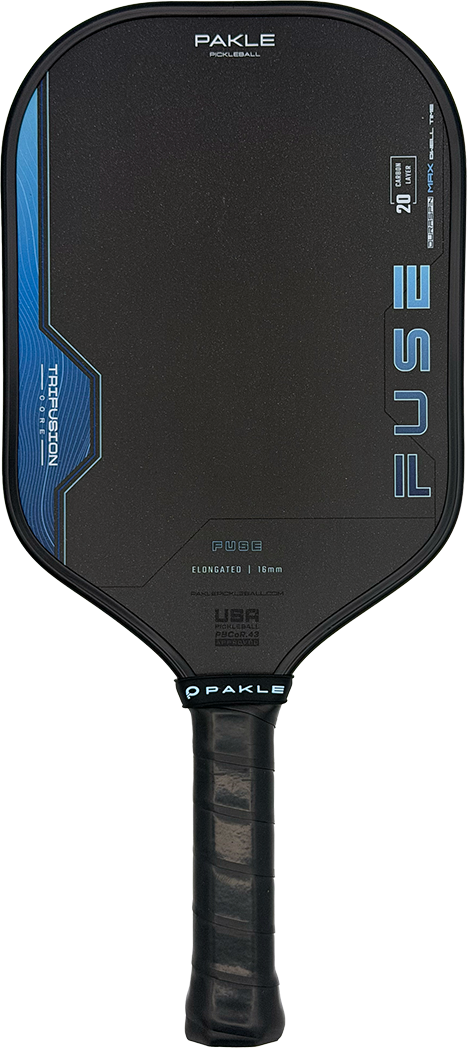
You saw the headline here first, ahead of the episode: the Fuse fell into Tier 4. The numbers are hard to argue with. Fresh, it read 2,050 RPM off the cannon, and after the accelerated wear protocol it came back at 1,470. That is 580 RPM gone, 28.3 percent, the same bucket as raw carbon fiber. After the hype, not the result any of us wanted, me included.
PAKLE saw last week issue, got in touch, and said they are working on it. Their theory is that the first batch shipped durable and later batches drifted off the recipe, so they are sending another sample. I will test it, but I will be blunt: even a higher tier on one paddle does not settle it. Durability has to repeat batch after batch before I bank on it. Credit where it is due, though. This is a 100 dollar paddle that plays great, with grit that holds up like raw carbon fiber, which was the benchmark as recently as six months ago. That is a lot of paddle for the price. It just is not the leap we were promised, at least not yet. One more honest note: Clayton could not stand the Fuse, calling it so hollow and deep that he felt like he was shanking more than usual, while I feel none of that and love hitting it. Vibration tolerance works like a food intolerance, where some hands register frequencies others never notice, so if a thonky feel bothers you, demo first. I lined it up against the Spartus in my Spartus Spitfire vs PAKLE Fuse matchup.
 Photo
PhotoSpartus Spitfire: Tier 3, and a Tale of Two Tests
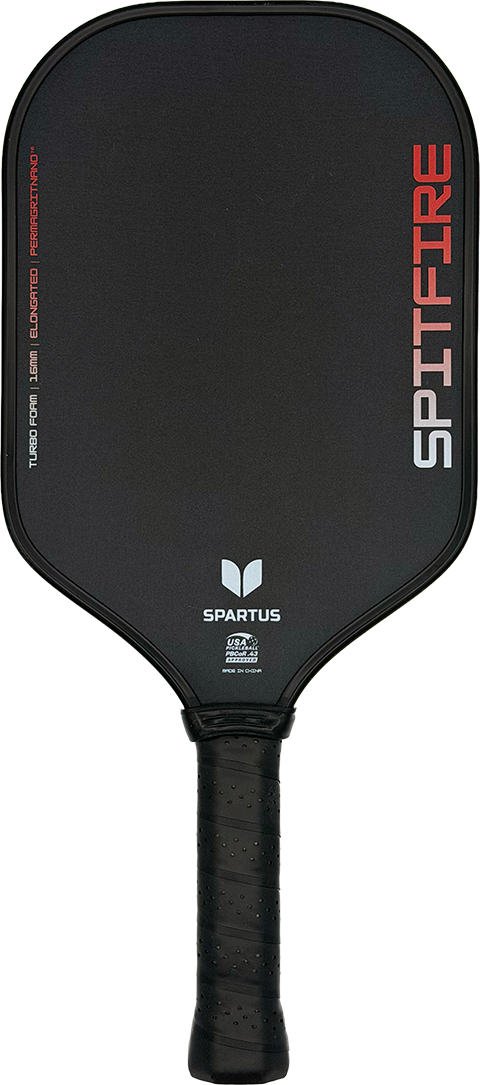
Permagrit Nano and the original Permagrit come from the same brand and share a name, but the recipes differ. The original is straight grit with no peel ply, just a field of particles under magnification, while the Nano is grit infused peel ply, that woven look, the same idea as Honolulu and 11Six24. The Spitfire numbers are exciting: 2,430 RPM fresh off the cannon and about 2,400 by arm, which is elite territory. After wear it held 2,072, a 358 RPM drop or 14.7 percent, so Tier 3, and a Tier 3 that starts this high is a great place to be, still above 2,000 RPM after the full protocol.
Braydon calls it tier 1, I call it tier 3, and we are both right, because we test different things. His rig abrades the face overnight with sandpaper and measures the microscopic texture before and after, while mine hammers one spot with a ball. Real play is both, impact plus the grit the ball drags across the face, and it turns out the Nano surface shrugs off abrasion better than impact. Two independent methods beat one, and that is exactly why this review space is healthy: we are not copying each other, we are triangulating. Full data is in my Spartus Spitfire review.
 Photo
Photo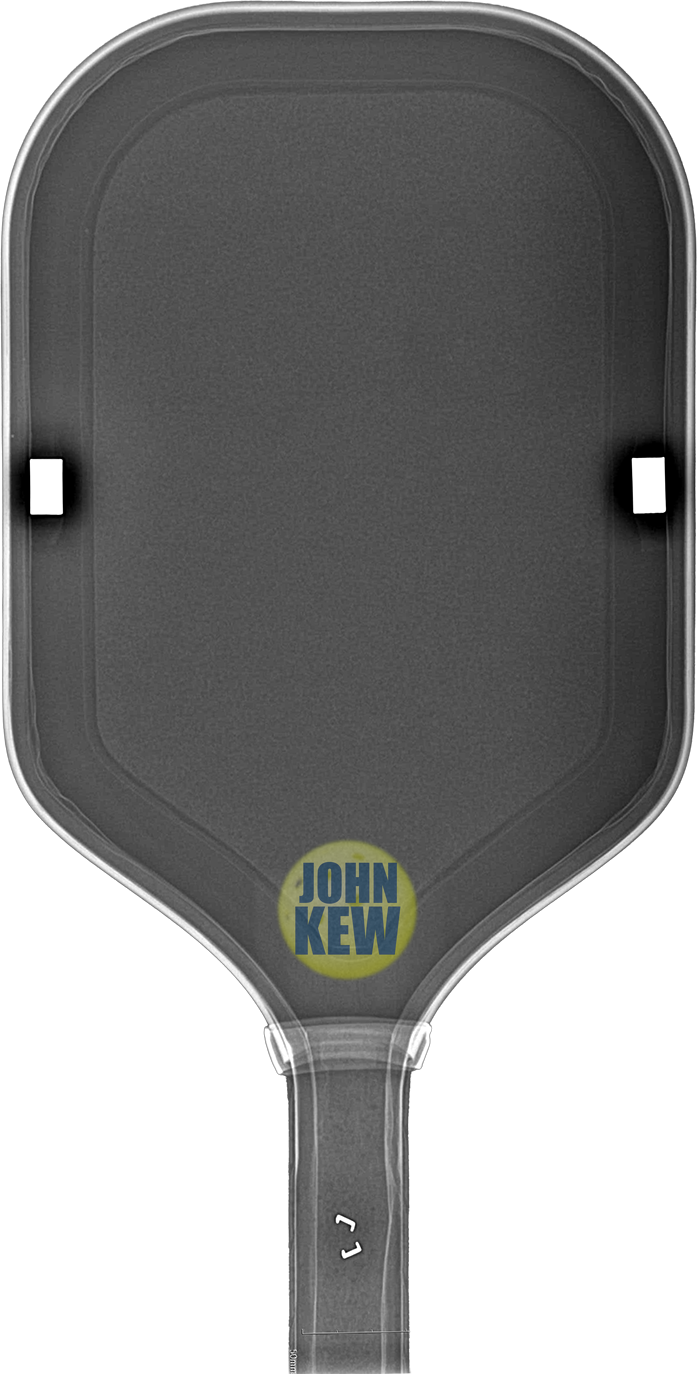 X-ray
X-rayRonbus Tenon: Tier 3, Twice Confirmed
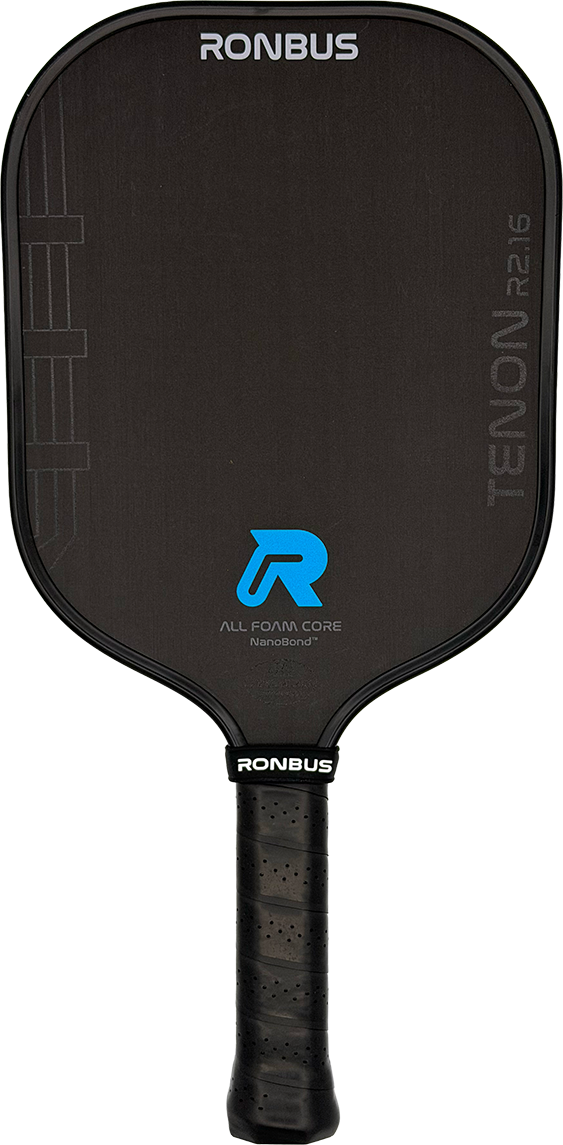
I put both a prototype and a production Tenon through the wear protocol. The prototype lost 12.5 percent, the production model 16 percent, both landing mid Tier 3. A low cannon baseline is not the same as a low spin paddle, because by arm I average nearly 2,300 RPM with the Tenon, right up against elite. Why the arm beats the cannon here is the next section. The whole lineup is broken down in my Ronbus Tenon review.
 Photo
Photo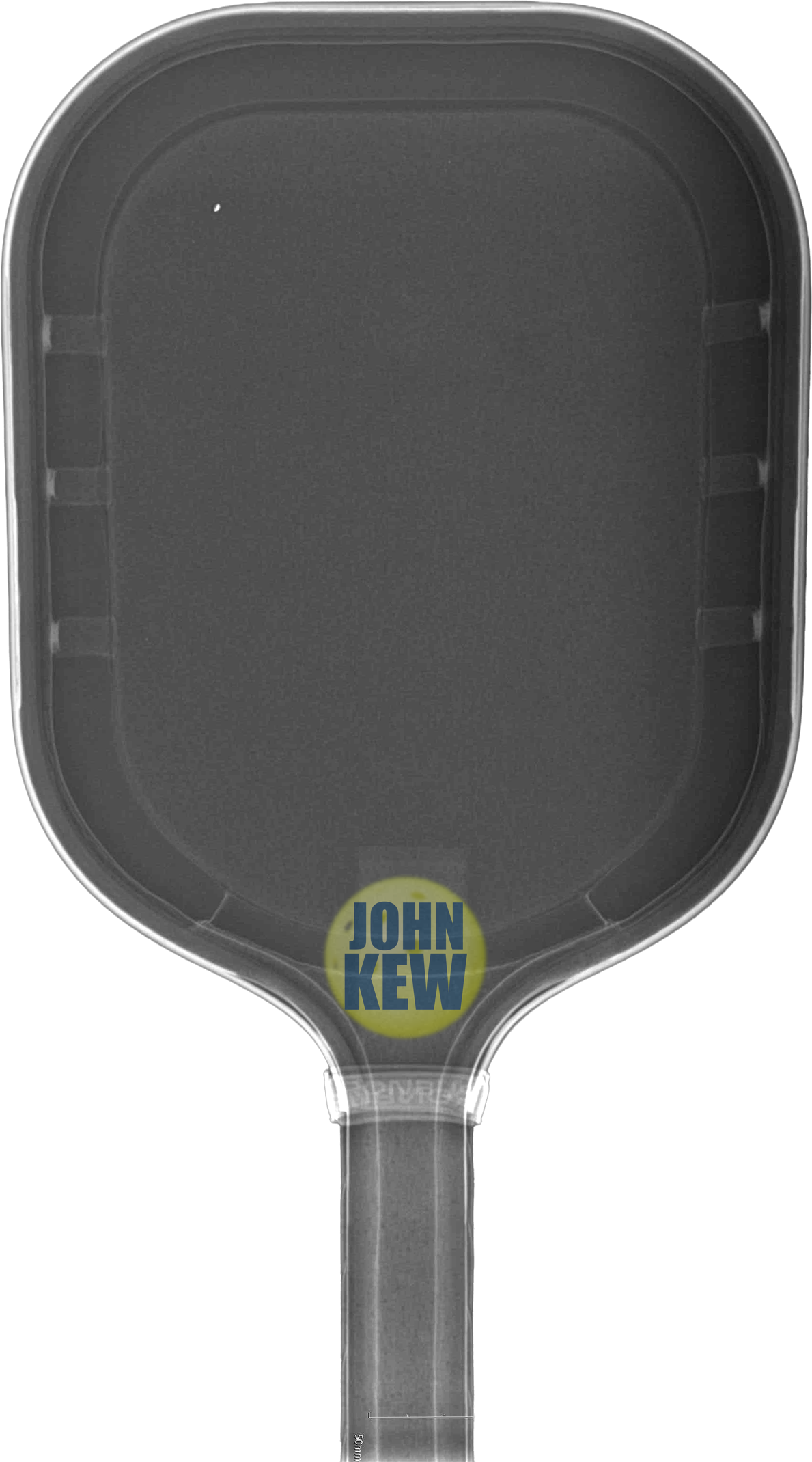 X-ray
X-rayWhat the 2,100 RPM Limit Actually Means
USAP and UPA-A now both cap direct spin at 2,100 RPM, measured by firing a ball at 40 mph into a paddle clamped at 30 degrees. Same limit, same speed, same angle, so are the two finally aligned? Closer than ever, and I am thrilled about it, but not proven yet.
Rule of thumb: their 2,000 is my 2,300 to 2,400. I shoot at 60 mph because that is where the best spinning paddles top out before the ball slips, and it matches my arm. Across 20 paddles tested at both speeds, 60 mph read about 360 RPM higher than 40 on average. Run the math on my leaders: the 11SIX24 Vapor Power 2 review at 2,333 and the Honolulu Blue Grit review at 2,237 both convert to about 2,000, comfortably legal, which fits since both are UPA-A approved. The Spartus P1 at 2,466, the original Permagrit, converts to just over 2,100, so it could fail the new direct test. The wrinkle for the P1 is that it does not matter, because paddles approved before October 1 are grandfathered in. Although, as Clayton noted, limits have a way of creeping. Ask PBCOR.
The cannon is not wrong about the OMNI, it is just answering a different question. My Selkirk OMNI review reads a meager 1,540 on the cannon, yet I get almost 2,300 with it by arm. The culprit is friction and slippage. Thirty degrees is where the grittiest faces peak, but lower friction surfaces need a steeper angle to keep the ball from sliding, and when you rip a topspin serve your arm finds that angle without thinking. The cannon cannot. That is by design: the cannon exists to cap the top end and give me a steady baseline for durability work. For real world spin, I trust my arm and the radar gun.
Kew & A
Anna Bright Says Most Pros Do Not Prefer Full Foam. Is She Right?
A viewer asked Anna Bright if JOOLA has a Gen 4 coming. She said no, and added that most pros do not prefer full foam. Thoughts?
AB, I would genuinely love to have you on the pod, you are a great interview, but I think that read is about a year stale. Pros were not on full foam mostly because of contracts, not taste. Full foam only recently reached the pro market through the likes of Selkirk, Luzz, and 11SIX24, and Chris and Isaac at Pickleball Studio have tracked the move: north of 50 percent of PPA men are on full foam now, with the women somewhere in the 30s. That is higher than most people assume, Anna likely included. The bigger truth is that pros adopt new paddle tech last, not first. They are locked into gear they have trusted for years and cannot spare two weeks playing below their level to re-dial. Ben Johns still uses the squared off elongated shape Franklin built for him, and after a year on JOOLA aero-curve Hyperion he went back to the square shape and named it the Perseus.
Quanta R2 or Tenon: Which Has More Control?
I love the Quanta R2. If the Tenon brings that power with more control, I am open to switching.
Firepower between them is basically identical, which we showed last week with the radar gun. What differs is flavor: the Quanta is poppier, the Tenon softer and weighted toward power over pop, and most players will find the Tenon easier to control. Here is the part nobody says out loud, though. Perceived control matters even when it is placebo. A paddle that feels controllable makes you swing looser and play from confidence instead of fear of the popup, and fear alone will make you worse with the very same paddle. So yes, I would expect the Tenon to feel like more control for you, partly from the paddle and partly because you will trust it. Both count.
What Is Up Next
Next up, PAKLE revised Fuse is inbound for a retest, and I hope they nailed it. Keep July 22 circled, when the remaining JOOLA defendants file and we learn who actually intends to fight. Launch calendar from this issue: Ronbus Tenon on Friday July 24, the Spartus Spitfire at month end, and the Mission First FireFight Pro in late August.
Thanks for reading, and for being the crowd that follows us from independent claim 17 to clamp angles without blinking. See you in the next one. Cheers. John
Want this a week early?
The newsletter breaks the verdicts before they hit the site. Free, every week.
Subscribe free →Explore the data behind these verdicts in the paddle database and the Comparison Lab. This issue was originally sent to subscribers on July 16, 2026.
I test every paddle independently, with no payment and no editorial input. The buy links above are affiliate links, and if you use them I earn a commission that helps support the website. It never changes how a paddle is tested or where it lands in the data. Read more about how I test.